

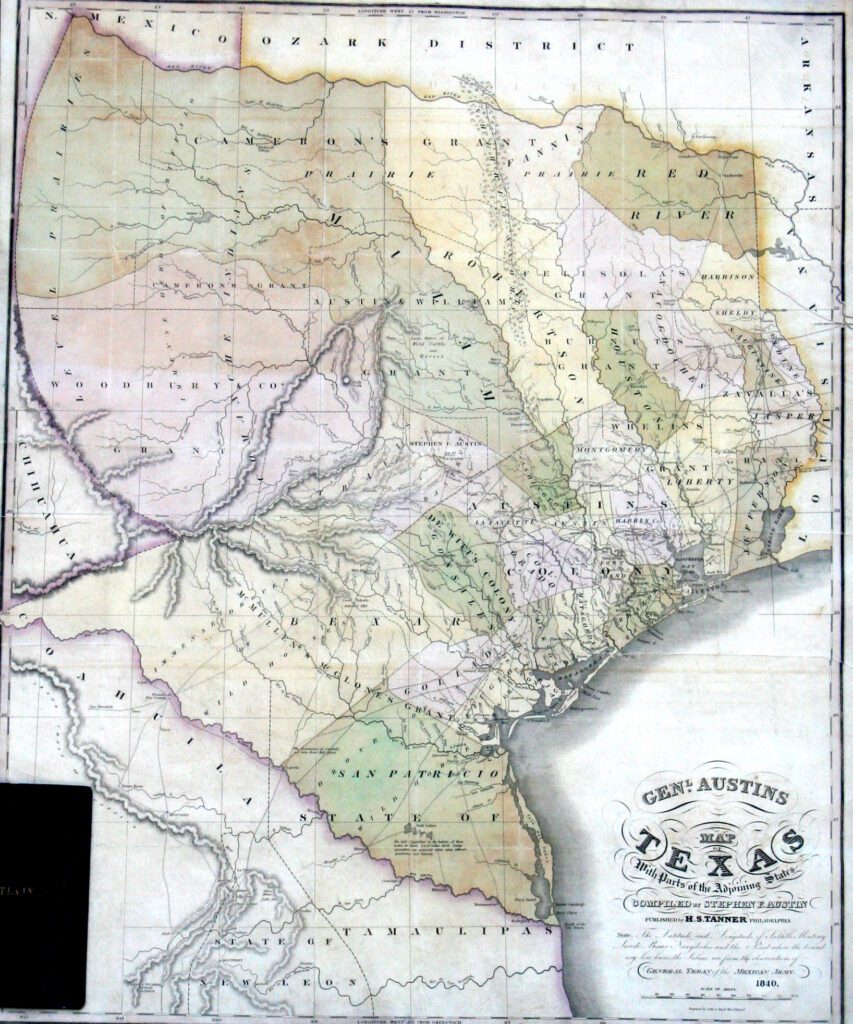
“Gone to Texas” was the popular slogan for settlers during the 1830s who immigrated from numerous countries and states to the newly formed Republic of Texas (1836-1846). Although the Republic of Texas struggled, the desire for vast amounts of cheap land and new opportunities lured settlers to Texas.
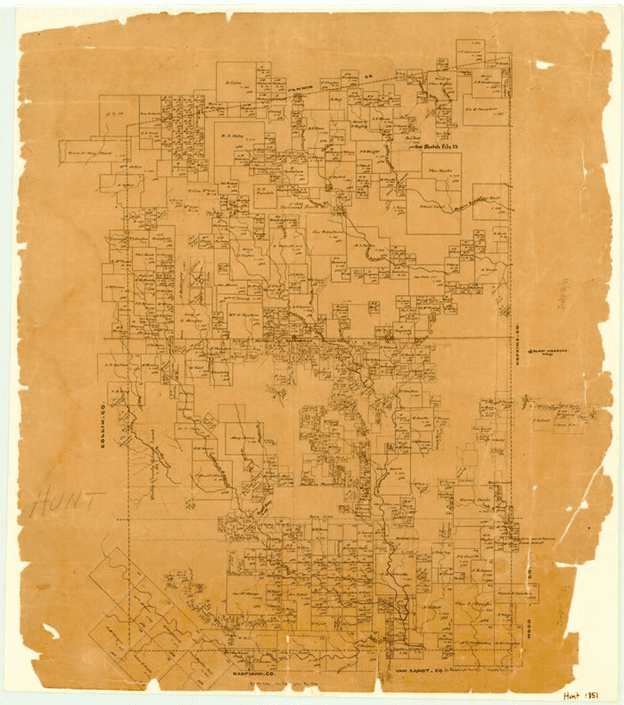
At their start in 1836, the Republic of Texas, covering an estimated 251,579,800 acres of land, established the General Land Office to help establish land grants. The early settlers of Hunt County first came between 1839 and 1846 from Kentucky, Tennessee and other parts of Texas. Settlers that had to immigrate to The Republic of Texas had to wait three years for their land titles of 640 acres for family heads and 320 acres for single men.[1] Certificates for land of 4428.4 acres were often sold to speculators and unsettled for some time.
The first permanent settlers in Hunt County, after the Native American inhabitants, were John W. Lane just three miles south of present-day Wolfe City, James Hooker south of present-day Lone Oak, and Isaac Banta in the south in 1843. Others were John W. Stewart in 1843 and Meredith Hart in 1846.[2]
McQuinney Howell Wright immigrated to Texas in 1839 with his brother-in-law Gideon Valsayne Harrison, and Harrison’s wife Zada. After marrying America Orr in 1843, they moved to Red River County. While in Texas, Wright became a surveyor where he would survey land under the condition that he would receive parcels of land. Wright was able to take over the John Gillespie certificate from 1839 of 640 acres from James Bourland in 1844.[3] In late 1845, Texas was admitted as the 28th state in the United States. On April 11, 1846, parts of Fannin and Nacogdoches were carved up into the newly formed Hunt County. Named after Memucan Hunt, the first minister of Texas to the United States, who had unsuccessfully proposed the annexation of Texas in 1838.[4] In 1846 Wright donated a portion of his claimed land to be the county seat that just so happened to be the required three miles from the center of the county. Town commissioners Isaac Banta, J.W. Lane, James Hobbs, Meredith Hart, and James Hooker had the choice of Wright’s claim or a claim at present day Center Point on FM 1570. An election was held to decide on April 11, 1846, and chose Wright’s claim
[1] Lang and Long, TSHA | Land Grants,” Land Grants.
[2] W.Walworth Harrison, History of Greenville and Hunt County (Waco, Texas: Library binding Company, 1976), p. 12-20.
[3] Harrison, History of Greenville and Hunt County, Texas, p. 17. There’s some controversy about how Wright obtained the land that would become the county seat of Greenville.
[4] Randolph B. Campbell, Gone to Texas: A History of the Lone Star State. (Cary: Oxford University Press, 2003). p, 163.
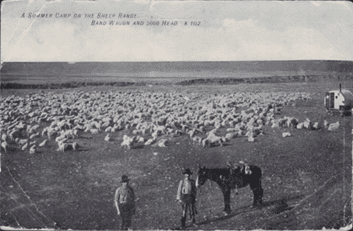
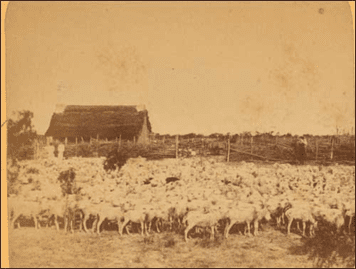
While you often think of cattle and Texas being synonymous, that was not always the case. In Hunt County raising sheep was very popular and at one time actually outnumbered horses and mules. According to the 1860 tax rolls there were 11,057 sheep, which averaged 27 per farm, but only 4,458 horses and 299 mules. In addition, very little cotton was grown until the arrival of the railroads into Greenville and the rest of the county in the early 1880s. Before then, cotton had to be transported by wagon down to Jefferson, which was not economically feasible. Once the railroad arrived, cotton became the major agricultural crop for the county and became the economic frontrunner for the area.
Recent Comments